
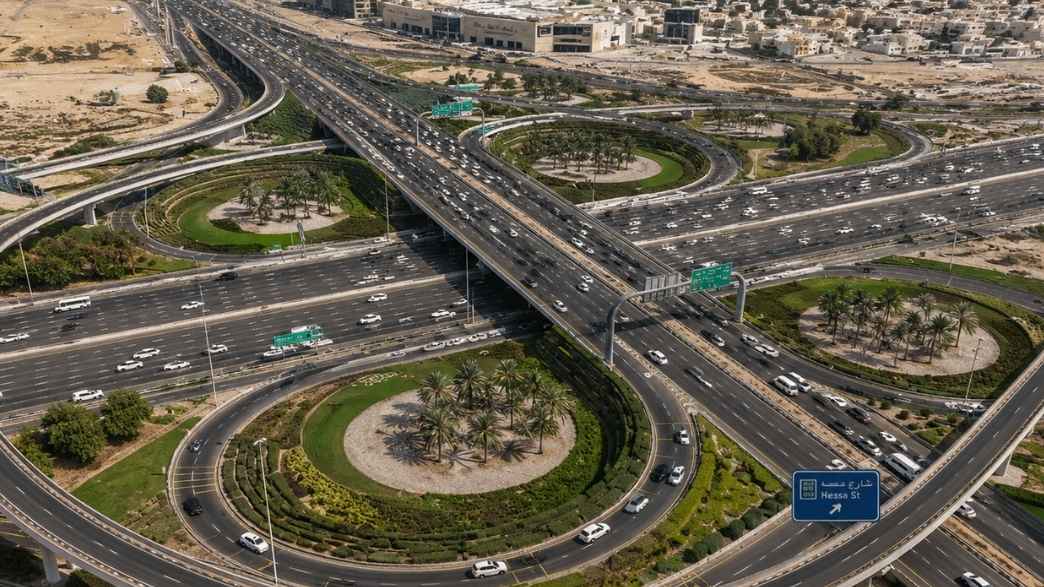
Hessa Street Development Transforms Dubai Commute: How the AED 690 Million Project Is Reshaping Traffic Flow Across the City
Hessa Street has been among Dubai’s busiest road corridors for many years. This one playing a crucial role as a connection between Sheikh Zayed Road, Al Khail Road, and various growing residential areas in the city. Those living in Jumeirah Village Circle (JVC), Al Barsha, Dubai Sports City, and Al Sufouh had been experiencing Hessa Street as a crowded road with long travel time and traffic jams for many years already.
However, today this scenario is slowly changing.
The Roads and Transport Authority (RTA) of Dubai has finished the implementation of some major phases of the Hessa Street Development Project. Which is a massive infrastructure project intended to boost traffic flow, increase road capacity and cope with the challenges caused by the growing population of the city. With a budget of around AED 690 million, the project is one of the biggest road projects implemented in Dubai recently.
Why has Hessa Street Became a Traffic Hotspot?
During the last ten years, Dubai saw a huge development of residential areas located within Hessa Street. The population of communities like JVC, Dubai Science Park, Arjan, Emirates Hills, and Jumeirah Lakes Towers increased significantly resulting in more traffic in the area.
As there were many people commuting from those areas through Hessa Street, its infrastructure was struggling to cope with increasing traffic. Long traffic jams became a usual thing when driving from Al Khail Road to Sheikh Zayed Road through Hessa Street.
In order to solve the traffic problems, RTA started the process of redevelopment of one of the busiest transport corridors of Dubai.
What Has Been Done So Far?
The phase of the project, which has just been completed, encompasses around 4.5 kilometres between Al Khail Road and Sheikh Zayed Road.
Main changes include:
- Hessa Street expansion to four lanes in each direction (from two).
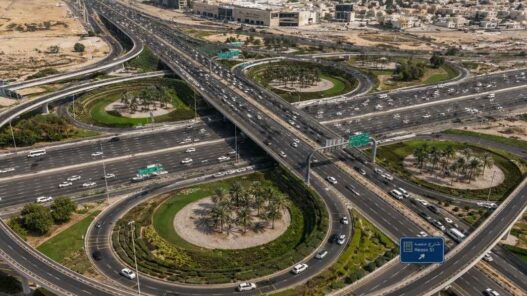
- New bridges at major intersections.
- Improvements of Sheikh Zayed Road, First Al Khail Street, Al Asayel Street, and Al Khail Road junctions.
- Changes in entry and exit points to distribute traffic better.
- Development of infrastructure for cyclists and users of e-scooters.
According to the RTA, those changes increased the capacity of the road twice and now the traffic capacity is approximately 16,000 vehicles per hour in both directions compared to 8,000 previously.
Travel Times Reduced Significantly
One of the key accomplishments of this project has been a decrease in travel times.
According to RTA estimations, travel times in the improved corridor were shortened from about 15 minutes to merely 4 minutes during normal operation. Such an enhancement may help save thousands of cumulative commuting hours for residents each day passing through this region.
Small savings of commuting time can significantly affect daily productivity of residents, their fuel consumption and quality of life.
Impact on JVC and Neighboring Communities
The project affects several rapidly developing residential areas of Dubai.
According to the estimates of RTA, the number of residents served by the corridor of Hessa Street could exceed 640,000 by 2030. Which means that the infrastructure development will be required to serve future needs of residents. Residences directly affected by this project include:
- Jumeirah Village Circle (JVC)
- Al Barsha
- Al Sufouh
- Dubai Science Park
- Arjan
- Emirates Hills
- Jumeirah Lakes Towers (JLT)
Such connectivity will allow enhancing accessibility of the area as well as stimulate commercial and residential developments of the area.
The Introduction of Sustainable Mobility
In addition to upgrading the road infrastructure. This project represents an important step towards the development of a sustainable transport system in Dubai.
A 13.5 km long cycle and e-scooter lane has been developed together with the other elements of the project. It allows providing new options of transportation for residents.
Urban planners expect that such kind of infrastructure will become increasingly necessary to achieve broader goals related to sustainability of Dubai.
What Residents Are Saying?
The reaction of residents is generally positive but it may depend on commuting route and peak hours of commuting.
Many residents have noticed the changes related to smoother traffic flow and reductions of commuting times in the improved corridor especially when traveling between Sheikh Zayed Road and Hessa Street. Some residents have pointed out that such changes helped to reduce the time of commuting and allowed people to move in previously congested sections of the corridor.
However, some residents noted that the problem of traffic congestion shifted to neighboring regions. Where the infrastructure was not upgraded yet. Some residents complained about additional inconvenience related to ongoing construction works associated with the implementation of the next phase of the project.
Transportation experts call this effect traffic redistribution.
Phase Two: Further Upgrades Are Coming
However, there is more that needs to be done since the project at Hessa Street is not finished yet. There are several things that are going to happen during Phase Two which involves expanding upgrades from Al Khail Road to Sheikh Mohammed bin Zayed Road and include:
- Building further bridges and flyovers.
- Expanding road capacity.
- Constructing grade-separated collector roads.
- New directional ramps.
- Interchange connections improvements.
Once Phase Two is completed, the time needed to travel from the starting point of the route is going to be shortened even further, reaching 5 minutes from the current 24 minutes. Capacity is also going to double from 4,000 to 8,000 cars per hour on some stretches of the street.
Supporting the Future Growth of Dubai
Infrastructure development projects such as Hessa Street are becoming crucial in supporting the growth of the city. Its attractiveness keeps growing among residents, businesses and investors from all over the world.
Roads are an integral part of Dubai’s transport system. That are huge investments are being made to make sure that urban growth is supported by mobility solutions.
The Hessa Street Development Project is part of a larger strategy. That includes road expansions, metro projects, cycling infrastructure developments, smart traffic and public transport.
Looking Forward
For the majority of the Dubai citizens, Hessa Street used to be associated with traffic jams. The upgrade of the street marks a significant change in the way Dubai is getting ready for the future urban and population growth.
Though there are many challenges left and many phases of the project are yet to be implemented. It is clear that the project is already showing positive results in terms of reducing travel time.
The fact that infrastructure developments remain crucial to the growth of Dubai. It can be seen through the examples of projects such as Hessa Street.